

No-Till as the basis of regenerative grain production
- 5.01
- време за четене: 2 мин.
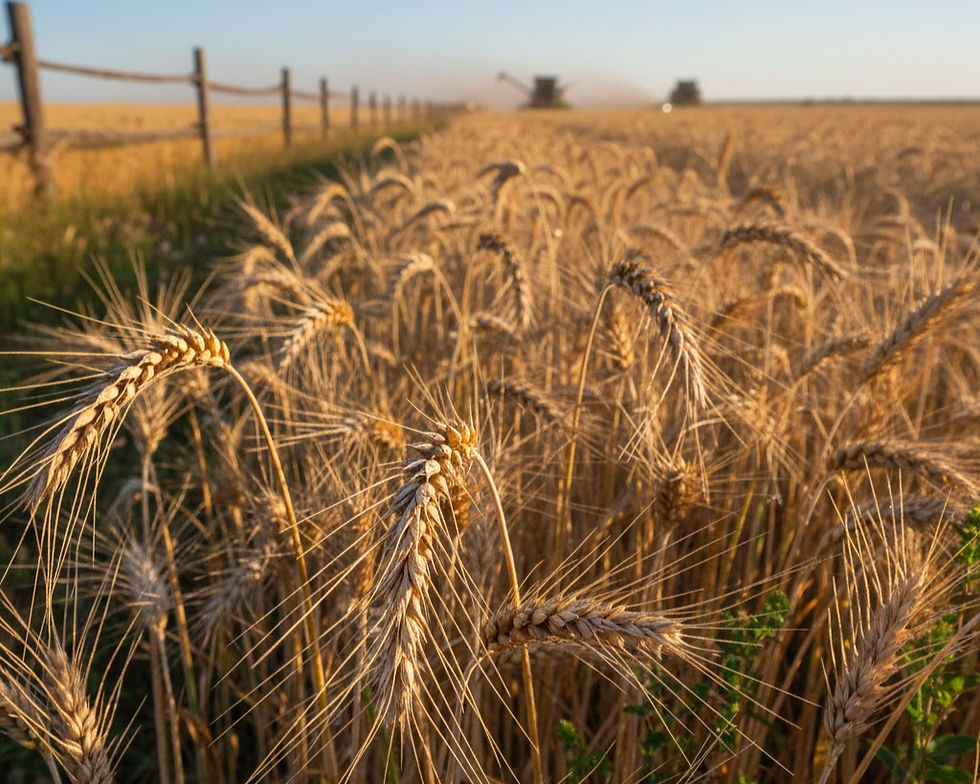
In recent years, the term regenerative agriculture has been increasingly discussed in farming circles — an approach that focuses not just on yield, but on restoring the soil, ecosystem, and long-term sustainability of the farm.For many farmers, the question arises: where does No-Till fit into this concept, and can direct seeding form the foundation of regenerative production?
The answer is clear — No-Till and regenerative agriculture do not exclude each other; they complement and largely overlap, especially in grain production.
What is regenerative agriculture?
Regenerative agriculture is not a strictly defined technology, but a system of principles aimed at restoring natural processes in the soil.Its main goals include:
increasing organic matter,
improving soil structure,
activating microbial life,
retaining moisture and carbon,
reducing dependence on external inputs.
In grain production, these goals are directly linked to how the soil is managed — or more precisely, whether it is tilled at all.
No-Till — the foundation of the regenerative approach
No-Till technology eliminates mechanical soil cultivation and allows the soil to function as a living system.This naturally aligns with several key principles of regenerative agriculture:
🔹 Minimal disturbanceWithout plowing or loosening, soil structure is preserved, and the pores and channels created by roots and microorganisms remain intact.
🔹 Continuous soil coverCrop residues from the previous season act as a natural mulch that:
protects against erosion,
reduces evaporation,
maintains a more even soil temperature.
🔹 Nourishing soil lifeResidues serve as food for microorganisms, which in turn break down organic matter and release nutrients for plants.
The role of cover crops
One of the strongest points of synergy between No-Till and regenerative agriculture is the use of cover and intermediate crops.In grain production, they serve several important functions:
improving soil structure through diverse root systems,
capturing residual nitrogen,
suppressing weeds,
increasing organic matter.
Combined with No-Till, cover crops accelerate soil regeneration and shorten the period needed to achieve stable results.
Real impacts in grain production
Experience shows that farms implementing No-Till in combination with regenerative principles report:
better root system development,
more uniform crops,
improved drought resilience,
more stable yields in the long term.
In the first few years, results may not be dramatic, but by the third or fourth year, noticeable improvements in soil health are observed, directly affecting profitability.
Lower costs, greater control
Both No-Till and regenerative agriculture aim to reduce external costs.Healthier soil:
retains more nutrients,
absorbs moisture more efficiently,
requires less mechanical intervention.
This leads to lower fuel costs, less wear on machinery, and better production planning.
Challenges along the way
It is important to emphasize that neither No-Till nor regenerative agriculture is a “quick fix.”They require:
a shift in mindset,
sound agronomic planning,
patience and consistency.
Early mistakes are part of the process, but with the right approach, the results are sustainable and long-lasting.
Conclusion
In grain production, No-Till is an integral part of regenerative agriculture.It creates the foundation upon which cover crops, diverse crop rotations, and better soil resource management can be built.
When land is treated not as an inert medium, but as a living organism, it begins to “work” for the farmer.This is the strength of the regenerative approach — healthier soil, more sustainable production, and a more secure future for grain farming.